Creating a school magazine as a way for motivation students to study English
Автор: Гусева Ольга Александровна
Организация: АНОО «Физтех-лицей» им. П.Л.Капицы
Населенный пункт: Московская область, г. Долгопрудный
The digital revolution would liberate news from printing presses, giving people portable devices that kept them informed all day long. Some stories would be enhanced by video, others by sound and animation. Readers could share articles, driving engagement across diverse communities[1].
The same thing is going on with school newspapers and magazines. Almost each school has its own website or an account in social networks such as VKontake or MAX where the news is published every 3-6 hours a day. We cannot disagree it is quite convenient to get the news as soon as it appears in the internet, but printing press is a kind of special culture.
Creating and publishing a school magazine is a good idea for schools to tell about its own school life style, talented students in poetry, fiction, science, the news and achievements; to find out students who are good at something new.
A school magazine has always been an image part of a school life in world-famous schools and colleges. Only in Tsarskoe Selo Lyceum three magazines were published by students in period from 1811 to 1816 («Neopytnoe pero» published by Alexander Pushkin, Anton Delvig, «Dlya udovolstvia I polzy» published by Wilhelm Kuchelbecker, «Litsejsky mudrets» published by Anton Delvig).[2]
Catherine Sloan (2017)[3] in her article «Rethinking the school magazine» tells about Eton’s «Microcosm» (1788) and «the Oxford High School Magazine» (1879).
She writes how pupils were presented as active participants, how editorials could challenge ideas about pupils’ agency in schools and many others. And again she says that the cover of «the Oxford High School Magazine» «shows that by the late nineteenth century, titles, emblems and mottoes were combined to create the instantly recognisable genre of the school magazine».
F. Scott Fitzgerald wrote stories and poems for the "Princeton Tiger" magazine, and the «Nassau Lit»[4].
Despite of new technologies European and American top colleges and universities still publish and print their own magazines. They are Stanford Magazine, Connection Magazine (University of West Florida), University of Chicago Magazine, Ohio State Alumni Magazine and others[5].
The pedagogical aspect. Learning a second language is a long and complex undertaking. A person is affected by struggling to reach beyond the confines of a first language and into a new language, a new culture, a new way of thinking, feeling, and even acting. Language learning is not just a set of easy steps and rules which you can learn once and can be programmed in a quick do-it-yourself kit.[6] Not only in Russia, but in the whole world, it takes much time and efforts to understand and speak English fluently. The most common question among lots of teachers in the world is how to motivate students to learn English.
Learning foreign languages provides to the common speech development of students. We suppose that reading is one of the main types of speech activity. As Dr. H. Douglas Brown, a professor in the MA-TESOL program at San Francisco State University, writes in his ‘Principles of Language Learning and Teaching’: «The human being is a social animal, and the chief mechanism for maintaining the bonds of society is language.»[7] And again: «Language learning is primarily a matter of transforming perceptions into conceptions. Language is a means thinking, of representing the world to oneself.[8]»
If we speak about a school magazine in English, it is very important to mention students’ motivation for learning the language as a useful life tool.
To sum up, we suppose that creating a school magazine in English language can be a good motivation to study the language as a life skill.
Editorial school office is an important medium of communication at educational institutions. It is the context within which students exist, think, feel, and relate to others. It is the «glue» that binds a group of people together. This work might also be defined as the ideas, customs, skills, arts, and tools that characterise a school where the magazine is being made.
The Linguistic aspect of creating a school magazine. The starting point of the research was to select British fashion magazines relate to Condé Nast, one of the world’s most renowned media companies. Nowadays there is a great number of fashion magazines subdivided according to the perception strata and interests. We have paid attention to the structure and format of the of the articles which we are interested and suitable for a school magazine, vocabulary features, stylistic devices and syntactic features used in the articles.
During lexical review we looked at the vocabulary representing different styles that is used in magazines.
The next step of our study was aimed at determining stylistic devices reflecting men and women speech styles of the English language.
The target audience of fashion magazines for women is women with clearly expressed feminine type of thinking. In such magazines (VOGUE, Cosmopolitan, Elle, Tatler) a certain attention is paid to the creation of the image of its reader. This is a young, ambitious woman who exactly knows what she wants, leads a healthy life style and wants to be aware of the recent trends in fashion. One of the aims of making a school magazine is creating an image of a successful lyceum student who knows what she/he wants, does his/her best, who looks neat and clean, who has friends and ready to help. As for the choice of lexis for male magazines it is obvious that usage of foul language prevails[9]. Female vocabulary is relatively narrower; the major part of women use the basic part of the vocabulary, which means that they use the most common and highly spread words in contrast to men who use a great number of neologism and professionalism in the speech.
It goes without saying that there is a certain correspondence between language and society. Language is inherently social and in all of its aspects can neither function nor develop without interacting with the society. Sociolinguistics id the study of language use within or among groups of speakers. The group that sociolinguists have generally attempted to study is called the speech community[10].
Summing up research we can say that adjectives which describe women’s personality and their inner world are mostly used in the female magazines, but more laconic and a number of vulgar words are used in the male ones as a symbol of their masculinity. So, we have come to conclusion it should be more adjectives, which relate to students’ success, their appearance, school uniform, achievements and even new knowledge.
Various stylistic devices such as phonetic, morphological, lexical, syntactic and graphic means are often used in fashion articles. They are aimed at achieving a common task - to represent the consumer’s point of view.Stylistic devices help to creat a visual image of the written text or just attract the reader’s attention. The most highly spread lexical stylistic devices in the selected articles are metaphor, simile, personification and metonymy.
Syntactic analysis results proved that that the place of the syntactic stylistic devices in the articles is based on peculiar syntactical arrangement. They include stylistic inversion, detached constructions and repetition. There are questions, requests, statements, explaining feelings and emotions in the texts. Because of the syntactic devices correlate with five basic communicative sentences types - declarative, interrogatives, imperatives, exclamatory and vocatives. The syntactic analysis of the selected articles has shown that men are laconic; they prefer simplicity and use, as a rule, simple sentences rather than compound or complex ones. As for the sentence functions we may say that compound or complex ones. For the sentence functions we may say that in the GQ magazine articles category «How to dress» Imperative and declarative sentences are most commonly used, as the articles deal with the instructions that help the reader to be prepared for the job interview, wedding or first date.
The analysis of sentence types in women fashion magazine articles proved that women prefer simple and compound sentence rather that complex sentences with subordinate clauses. Women are more laconic and express themselves in easier ways, but still they are more expressive and emotional. Exclamatory sentences used in articles express powerful feelings and emotions triggered by fashion items in women. Authors of the articles targeted to women use the so-called «woman’s modals» while strutting the sentences. Usually the author of the article cares about the target audience she writes to and takes into consideration the concept of complexity, trying to use sentences in such way as to show her attitude towards the subject she writes about.The author makes statements while giving pieces of advice, so we can say that such type of sentences is highly spread and common for all selected articles as well as imperatives with the help of which the author expresses an order, a request or gives advice.
Creating a school magazine. Editing and proofreading are critical components of creating any publication, including a school magazine, we should organise a designated team of editors who are responsible for reviewing the content for accuracy, grammar, and style according to world-fashioned magazines before it is published.
It is important to proofread the final draft at least twice to ensure that spelling errors and typos are caught.
The final step in creating a school magazine is the printing and distribution process. If the allocated budget is tight, consider printing in black and white or creating a digital version of the magazine. Once printed, distribute your magazine through school events, and online platforms. Offer a school magazine subscription to parents and faculty. Encourage lyceum students to share the school magazine with their friends and family to help build its audience.
Designing the magazine, we also should pay attention to the visual elements like layout, typography, and images. The design should be visually captivating, easy to navigate, and complement the magazine’s overall tone.
Integrate school branding and colours: Infuse the school’s branding and colours throughout the magazine to establish a consistent and professional aesthetic.
We also should pay attention on selecting the right tools: a wide variety of publishing and design tools are available. Choosing a tool that suits the team’s skill and budget.
Making a school magazine is a great idea for teachers and students to work together,
[1]https://www.nytimes.com/2024/02/28/technology/news-media-industry-dying.html
[2]https://www.alexanderpalace.org/2006tsarskoe/second_suite.html
[3]https://historyofeducation.org.uk/rethinking-school-magazine/
[4] Bruccoli (2002) [1981], Some Sort of Epic Grandeur: The Life of F. Scott Fitzgerald (2nd rev. ed.), Columbia, South Carolina: University of South Carolina Press, ISBN 1-57003-455-9. 45, 65–68, 75.
[5]https://emagazines.com/blog/college-magazines/
[6]https://cyberleninka.ru/article/n/benefits-of-newspapers-and-magazines-in-foreign-language-learning-process/viewer
[7] Brown H. Douglas Principles of Language Learning and Teaching, Fifth Edition. Pearson Education, Inc. 2007. P. 164
[8]Brown H. Douglas Principles of Language Learning and Teaching, Fifth Edition. Pearson Education, Inc. 2007. P. 49
[9] Smith P.M. «Language, the Sexes and Society». Oxford: Basil Blackwell, 1985; p.211
[10] Wardgaugh, R. An Introduction to Sociolinguistics. UK: Blackwell, 2002; p.432
Опубликовано: 30.03.2026
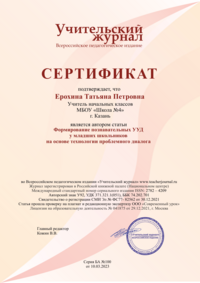
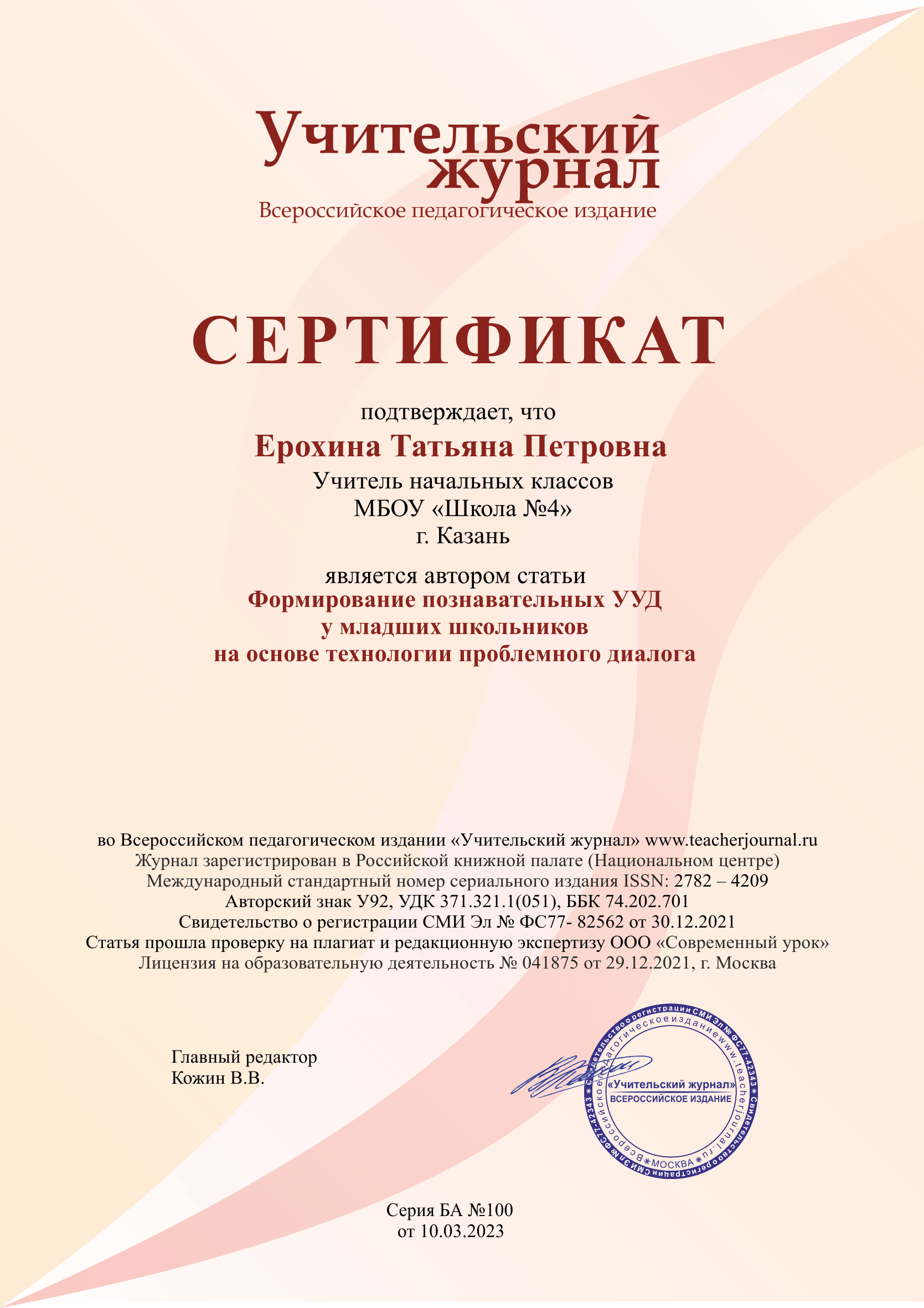
Авторский сертификат
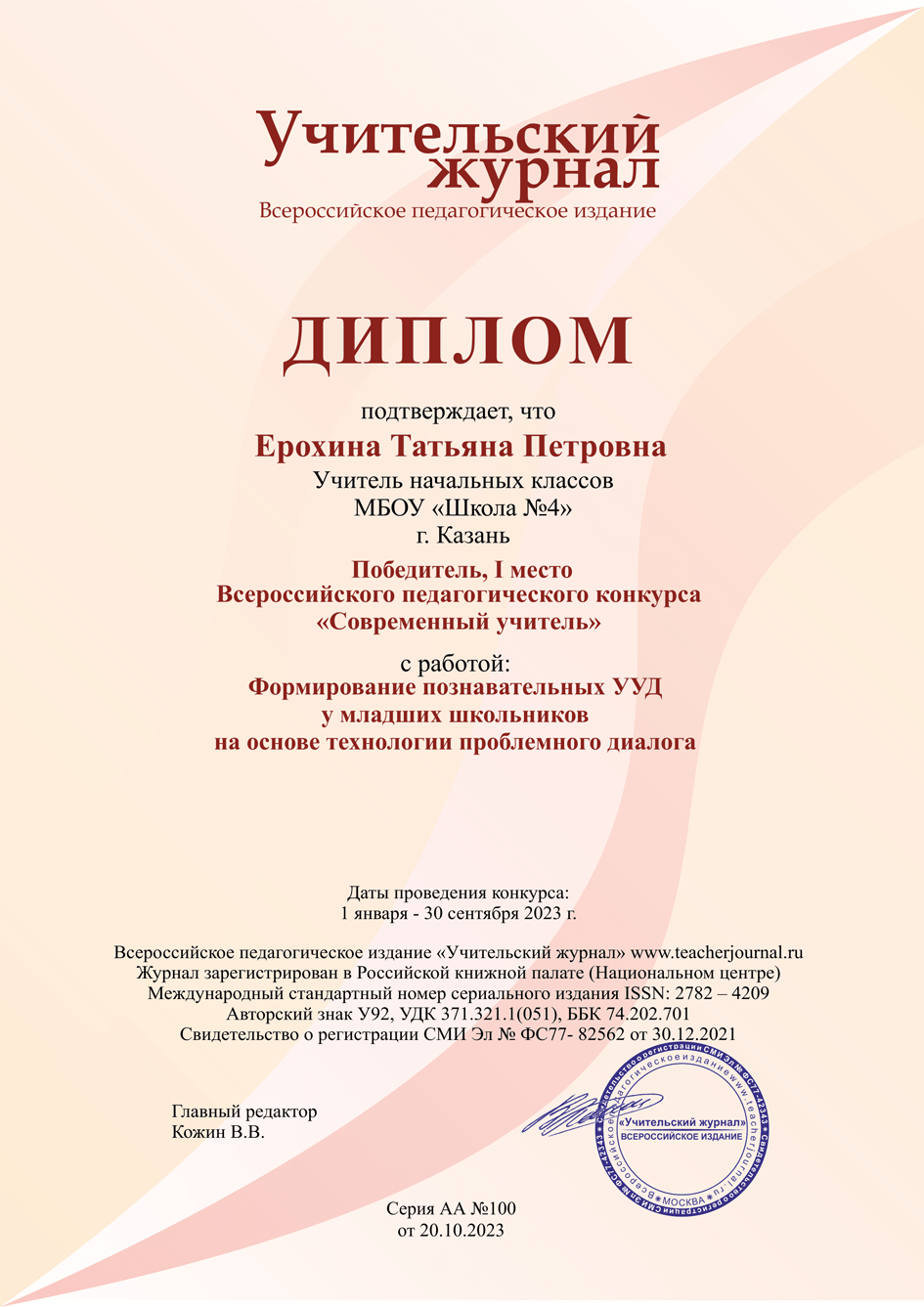
Диплом участника конкурса
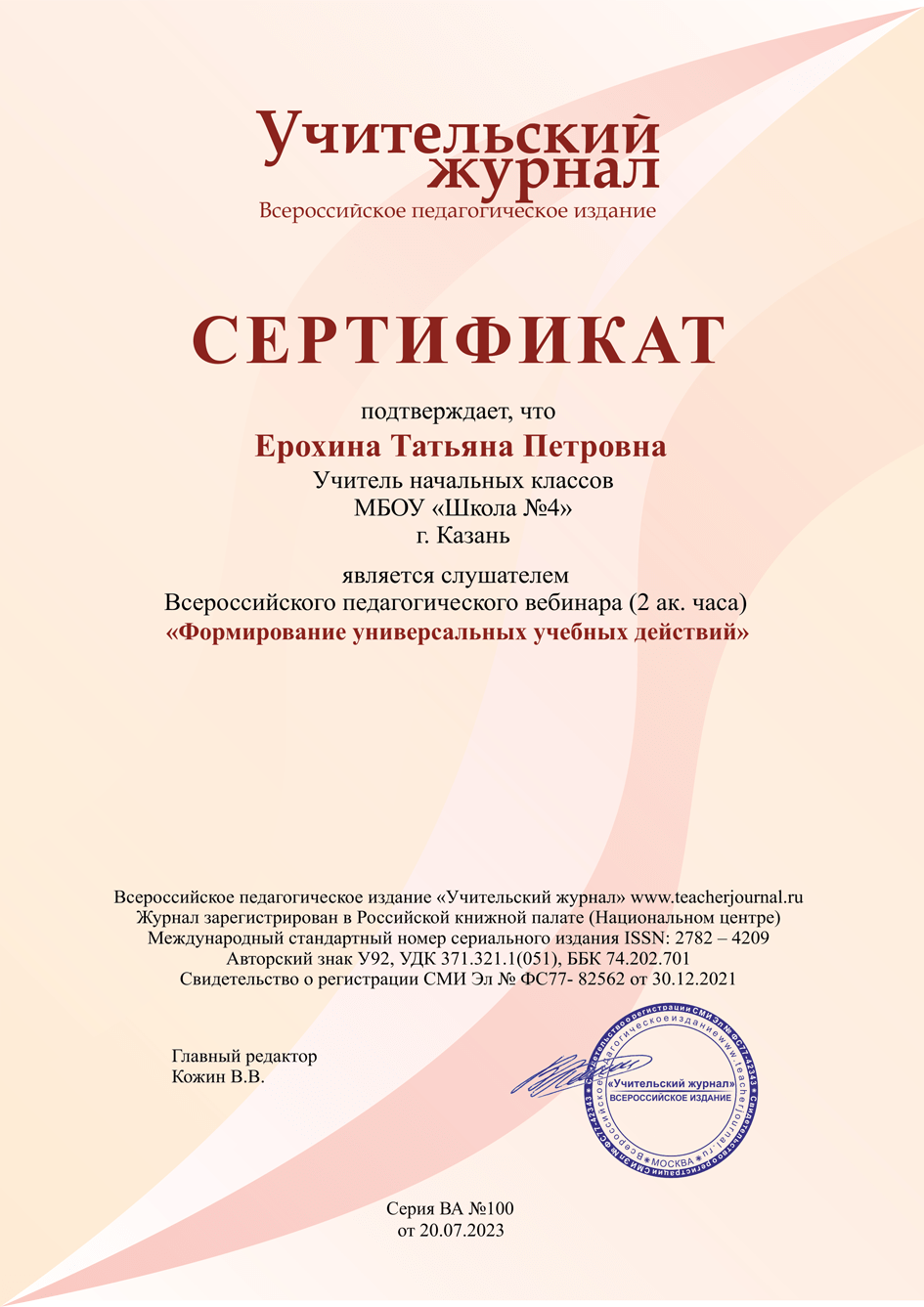
Сертификат слушателя вебинара
Регистрация в Федеральной службе по надзору в сфере связи, информационных технологий и массовых коммуникаций (Роскомнадзор)

Регистрация Российской книжной палаты, международный стандартный серийный номер ISSN: 2782 – 4209